Gourmia has built a reputation in the budget appliance market by offering features typically found in premium equipment at prices that undercut established brands. Their dehydrator lineup follows this formula, providing cabinet-style designs with digital controls for roughly half the cost of comparable Excalibur or Weston units.
The GFD1950 (9-tray) and GFD1650B (6-tray) models target beginners wanting the convenience of slide-out trays and glass doors without the $200+ entry fee. However, budget engineering involves compromises in construction quality and cleaning accessibility that potential buyers need to understand before purchasing.
Gourmia Model Lineup
Gourmia offers two primary dehydrator models for home use, differentiated primarily by capacity:
GFD1650B (6-Tray): The compact model targets small households with limited counter space. It provides six square trays measuring 11.5″ x 11.5″, yielding approximately 5.4 square feet of drying space. The unit measures 13.5″ x 12.5″ x 12″ and weighs 10.8 pounds—portable enough to store in cabinets between uses. Pricing ranges from $90-$120.
GFD1950 (9-Tray): The larger model expands capacity to nine trays (8.1 square feet) while maintaining the same footprint width but increasing height to 17″. The 600-watt heating element (vs. 400W in the 6-tray) handles the additional load. This model runs $110-$140, placing it in direct competition with the Nesco Gardenmaster and entry-level Cosori units.
While the 9-tray model offers impressive paper capacity, the slide-out tray design reduces usable space compared to fixed rack systems. Real-world capacity equals roughly 7.5 square feet—still substantial for the price point, but not the full 9-tray promise.
Key Features and Controls
Both models share identical control interfaces—a digital panel at the top featuring separate buttons for temperature, time, and power, with an LED display showing current settings. The interface earns praise for intuitive operation; you press the temperature button, then up/down arrows to select, and repeat for time. No scrolling through menus or deciphering cryptic icons.
Temperature range spans 95°F to 158°F (35°C to 70°C) in the 6-tray model, while the 9-tray version extends to 158°F maximum. Notably, neither reaches the 165°F threshold recommended for poultry jerky safety without pre-cooking.
The transparent glass (actually polycarbonate) front door slides upward rather than swinging outward, saving clearance space in tight kitchens. This design allows checking progress without releasing heat, though the plastic construction scratches easily and clouds over time with cleaning.
Included accessories vary by retailer but typically include one solid sheet for fruit leather and one mesh screen for small items. Additional sheets cost $12-$15 each—steep for plastic accessories that cost pennies to manufacture.
Performance Testing Results
Testing of the GFD1950 over six weeks revealed inconsistent performance that varied significantly by food type.
Fruit Drying: Apple slices dried adequately in 7 hours at 135°F, though texture varied between trays. Top trays produced leathery, pliable results while bottom trays approached crispness. Rotating trays halfway through solved the inconsistency, negating some convenience of the cabinet design. Banana chips required 10 hours—longer than the 8 hours in comparable Nesco units.
Jerky Production: Using 3 pounds of marinated beef arranged across 6 trays, the unit maintained 158°F (maximum setting) and produced edible jerky in 6.5 hours. However, the inability to reach 160°F means pre-cooking meat to safe temperatures before loading—a step purists prefer to avoid. The results lacked the consistency of horizontal-flow dehydrators, with edges overdrying while centers remained slightly moist.
The 158°F maximum temperature prevents safe dehydration of raw poultry. For turkey or chicken jerky, pre-cook meat to 165°F internal temperature in an oven before loading into the Gourmia. This adds preparation time and changes texture compared to continuous-drying methods.
Herb Drying: Basil and parsley dried successfully at the 95°F minimum setting, preserving color better than higher-temperature units. The 6-tray model’s lower wattage (400W) actually proves advantageous here, providing gentler airflow that doesn’t blow lightweight herbs around the cabinet.
Cleaning Challenges
Here’s where the Gourmia reveals its budget origins most clearly. The cabinet interior features numerous corners, crevices, and the rear fan housing that collect food particles and resist cleaning.
The slide-out trays use wire frames with plastic mesh inserts. The mesh traps food particles in its weave, requiring toothbrush scrubbing to clean thoroughly. Unlike stainless steel trays that withstand aggressive scrubbing, the plastic mesh scratches easily, creating bacteria-harboring grooves over time.
The rear-mounted fan housing isn’t removable, yet food particles inevitably find their way behind the protective screen. Cleaning requires compressed air or careful vacuuming with a brush attachment—maintenance steps unnecessary in better-sealed units.
Line the bottom drip tray with parchment paper before each use. This catches drips that would otherwise bake onto the cabinet floor. Replace the paper between batches—it’s cheaper than scrubbing baked-on marinade.
Trays are technically dishwasher-safe (top rack), but the heat warps the plastic frames over time. Hand washing extends tray life but requires 10-15 minutes of scrubbing per session.
Long-Term Durability Concerns
The Gourmia’s 1-year warranty aligns with budget appliance standards, but user reports suggest potential longevity issues. Common complaints after 12-18 months include:
- Door seal degradation: The polycarbonate door warps from heat cycling, eventually failing to seal properly and leaking heat/moisture.
- Fan bearing noise: The rear-mounted fan develops rattling or grinding sounds, indicating bearing wear.
- Tray rail failure: Plastic guides that support sliding trays crack under load, causing trays to drop or jam.
- Control panel sensitivity: The touchpad becomes unresponsive if moisture infiltrates the membrane (common when loading wet produce).
These issues don’t affect all units—many users report 3+ years of reliable service—but the failure rate exceeds that of similarly priced Nesco units. The cabinet design’s complexity creates more failure points than simple stackable designs.
Final Verdict
The Gourmia GFD1950 and GFD1650B occupy an awkward middle ground. They offer the aesthetics and convenience features (glass doors, digital controls, slide-out trays) of premium dehydrators at budget prices, but material quality and cleaning practicality lag behind simpler competitors.
Buy the Gourmia if: You prioritize appearance (the glass door looks more “professional” than stackable plastic units), you dehydrate primarily fruits and vegetables (not meat), and you accept that you’ll replace the unit in 2-3 years rather than owning it for a decade.
Skip the Gourmia if: You process meat regularly (temperature limitations), you hate cleaning (the cabinet design requires significant maintenance), or you want long-term reliability (simpler designs last longer).
For the $110-$140 price of the 9-tray model, the Nesco Gardenmaster offers superior airflow, easier cleaning, and expandable capacity, while the Cosori 6-Tray provides better build quality and higher temperature capability. Both represent smarter investments for serious users.
However, if you found the Gourmia on sale under $90, or if the slide-out tray convenience matters more than longevity, it performs adequately for casual fruit drying and occasional jerky batches. Just go in with realistic expectations about the cleaning commitment and 158°F temperature ceiling.
Frequently Asked Questions
Yes, Gourmia sells replacement trays through their website and Amazon, priced at $15-$18 per tray. However, availability varies seasonally, and some users report waiting 3-4 weeks for backordered parts. Generic trays rarely fit properly due to the specific slide-rail dimensions.
New Gourmia units often off-gas from the heating element coating and plastic trays during the first 2-3 uses. Run the empty unit at maximum temperature (158°F) for 2 hours before first food use to burn off manufacturing residues. Wash trays thoroughly with hot soapy water before loading food.
The GFD1950 produces approximately 60 decibels at 3 feet—noticeably louder than the 55dB of stackable competitors but quieter than commercial units. The sound resembles a desktop fan on medium speed. Light sleepers may find it disruptive if placed in adjacent rooms, but kitchen operation doesn’t prevent normal conversation.
No. Unlike stackable dehydrators that accommodate extra trays, the Gourmia’s cabinet design has fixed internal rails for exactly 6 or 9 trays (depending on model). You cannot add capacity beyond the original design. If you anticipate outgrowing the capacity, consider expandable alternatives like the Nesco Snackmaster series.
The 95°F minimum temperature accommodates raw food preparation (typically requiring temperatures below 118°F). However, raw food enthusiasts should verify actual internal temperatures with a thermometer, as some units run 5-10°F warmer than the display indicates at low settings. The rear-mounted fan also creates stronger airflow than some raw food practitioners prefer for delicate items.
Summary
Gourmia dehydrators offer an entry point into cabinet-style dehydration at stackable-unit prices. The digital controls and glass door provide convenience and aesthetics that justify the purchase for casual users who dehydrate primarily fruits and vegetables.
However, the cleaning difficulties, temperature limitations, and durability concerns make this a poor choice for high-volume users or meat processors. The “affordable starter” label fits, but plan to graduate to a more robust unit if dehydration becomes a regular habit. For the price, it performs adequately, but “adequate” may not suffice for demanding users.
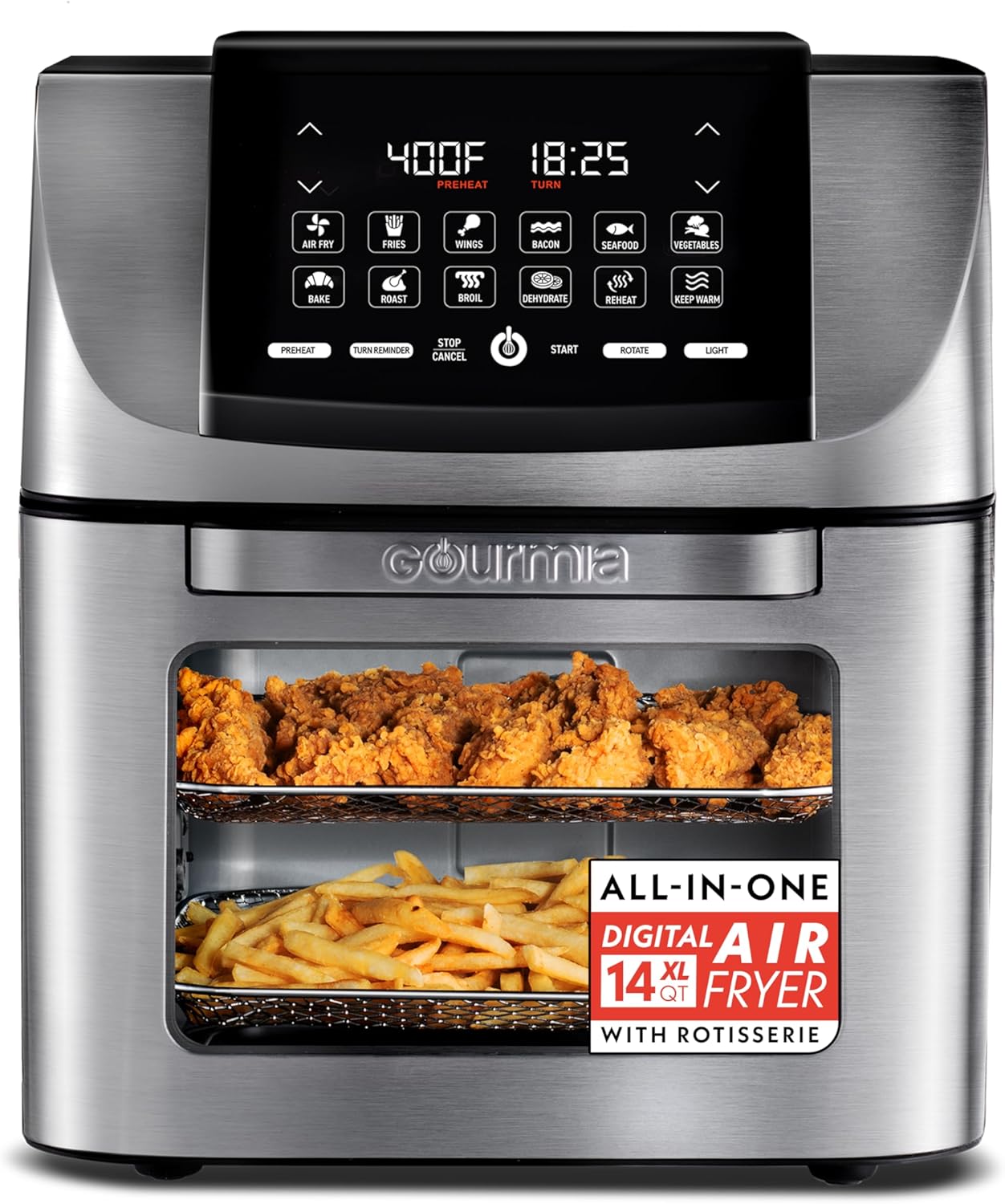
Gourmia GFD1950 9-Tray Dehydrator
Pros
- Cabinet design with slide-out trays
- Digital controls with easy interface
- Transparent door for monitoring
- Low temperature setting (95°F)
- Compact footprint for capacity
Cons
- Difficult to clean interior corners
- 158°F max temp (not 165°F)
- Plastic trays scratch easily
- Durability concerns after 12+ months
- Inconsistent drying between trays
