The Chefman 5-Tray Round Food Dehydrator occupies the absolute bottom of the electric dehydrator market, typically selling for $45-$60. In a category where $150+ units dominate discussions, this bare-bones appliance raises an obvious question: can something this cheap actually work?
After three months of regular use, the answer is qualified yes. The Chefman dehydrates food effectively within its limitations. Those limitations, however, are significant—fixed temperature operation, no timer, and basic plastic construction that won’t survive rough handling. Understanding these constraints prevents disappointment while acknowledging genuine value for specific use cases.
Design and Construction
The Chefman follows the classic vertical stack design: a base unit containing a 280-watt heating element and fan, topped by five clear plastic trays and a vented lid. The circular footprint measures 12 inches in diameter, occupying roughly the same counter space as a large blender.
Trays feature adjustable height spacers, allowing you to remove trays to accommodate thicker items or keep all five for maximum capacity. Each tray provides approximately 70 square inches of drying surface, totaling 3.5 square feet with all trays installed. The trays measure 9.5 inches in diameter—smaller than the 13-inch trays found in Nesco units, but adequate for personal-batch sizes.
The BPA-free plastic trays feel lightweight but not flimsy. They flex slightly when loaded heavily but return to shape when cooled. The base unit uses ABS plastic that resists the warping sometimes seen in cheaper dehydrators after repeated heat cycles. At 4.25 pounds total weight, the unit stores easily in upper cabinets.
Controls consist of a single power button—press once to start, press again to stop. No temperature adjustment, no timer, no indicator lights beyond the power LED. This simplicity eliminates user error but also removes control over the drying process.
Drying Performance
Testing focused on three metrics: drying speed, evenness, and final product quality across common applications.
Apple Chips: Sliced to 1/4″ thickness and arranged on all five trays, apples reached leathery consistency in 8 hours. The fixed operating temperature (measured at approximately 140°F) sits higher than ideal for fruit (135°F recommended), resulting in slightly darker coloration than premium units but acceptable texture and flavor.
Beef Jerky: Here the Chefman reveals its primary weakness. The 140°F maximum temperature falls 20°F short of USDA recommendations for safe meat dehydration without pre-cooking. When testing with pre-heated meat (brought to 160°F internal temperature in the oven before dehydrating), the unit produced acceptable jerky in 7 hours. Without pre-heating, the safety risk outweighs any convenience savings.
Never dehydrate raw meat in the Chefman without pre-cooking to 160°F. The unit cannot reach temperatures necessary to kill pathogens like E. coli and Salmonella. For regular jerky production, invest in a unit reaching 160°F minimum.
Herbs: Basil and parsley dried adequately in 4-5 hours. The 140°F temperature runs hotter than optimal for herb preservation (95°F-105°F preferred), resulting in slightly faded color but retained flavor for culinary use. For medicinal herb preservation where volatile oil retention matters, this unit runs too hot.
Critical Limitations
Purchasing the Chefman requires accepting four significant constraints:
No Temperature Control: The unit runs at whatever temperature the thermostat maintains—approximately 140°F in testing, though this varies ±5°F based on ambient room temperature and load size. You cannot lower heat for delicate herbs or raise it for poultry safety.
No Timer: The unit runs until manually unplugged. Overnight drying requires either waking to shut it off or accepting over-dried product. External smart plugs ($10-$15) can add automatic shutoff capability, slightly eroding the price advantage.
Fixed Capacity: Unlike expandable units such as the Nesco Snackmaster, the Chefman accepts exactly five trays. No expansion options exist. If you outgrow the capacity, you’re buying a new dehydrator rather than upgrading.
Vertical Airflow Issues: Bottom trays dry faster than top trays by approximately 30%. Testing showed bottom apple slices finished in 6.5 hours while top trays required 9 hours. Rotating tray positions every 2 hours solves this but requires active monitoring.
Safety Considerations
Beyond the meat temperature concerns, the Chefman presents standard electrical safety requirements common to all dehydrators. The base-mounted heating element requires placement on heat-resistant surfaces—melamine countertops or wood cutting boards, not directly on laminate or cloth.
The unit includes basic overheat protection that shuts down the element if internal temperatures exceed 185°F. During testing, this never triggered during normal operation, but it provides backup protection against thermostat failure.
The clear trays allow visual monitoring of food without disassembling the stack—a safety feature preventing accidental steam burns from lifting hot lids. However, the trays themselves reach 130°F+ during operation, requiring oven mitts for removal.
Alternatives to Consider
Before purchasing the Chefman, evaluate whether spending an additional $20-$40 resolves your specific limitations:
For Temperature Control: The Hamilton Beach 32100A ($85-$100) adds digital temperature adjustment from 100°F-160°F and a 48-hour timer. For jerky enthusiasts, this safety and convenience upgrade justifies the price difference.
For Expansion: The Nesco FD-60 Snackmaster ($65-$85) starts with four trays but expands to 12, growing with your skills. It also runs quieter and includes Nesco’s superior Converga-Flow air circulation.
Frequently Asked Questions
The Chefman produces approximately 55 decibels at 3 feet—comparable to quiet conversation or background music. The 280-watt fan generates less noise than higher-powered units. You can run it in a kitchen during evening hours without disrupting conversation, though the continuous sound may disturb light sleepers if placed near bedrooms.
While the unit includes overheat protection, the lack of automatic shutoff means it runs indefinitely until unplugged. For unattended operation, use an external smart plug programmed to shut off after your desired drying time. Never leave the unit running while away from home for extended periods (8+ hours) as over-drying creates fire risks with fatty foods like jerky.
Chefman sells replacement trays directly through their website at approximately $8 per tray. Generic 9.5-inch round trays sometimes fit but may not stack properly due to slight dimensional variations. Given the unit’s $50 price point, replacement trays at $8 each mean damaging three trays approaches the cost of a new unit—a consideration for rough users.
Yes, with the same meat safety precautions as human food. Chicken jerky for dogs requires pre-cooking to 160°F before dehydrating to eliminate Salmonella risk. Sweet potato chews work well at the fixed 140°F temperature. Clean trays thoroughly after pet use with hot soapy water and vinegar rinse to prevent bacterial cross-contamination with human food.
Chefman provides a 1-year limited warranty covering manufacturing defects. The warranty excludes tray damage from misuse (warping from overloading, cracks from dropping) and heating element failure caused by obstructed airflow. Customer service responds via email within 24-48 hours, though phone support is limited to weekday business hours.
Bottom Line
The Chefman 5-Tray Round Dehydrator delivers exactly what its price suggests: basic dehydration for non-demanding users. It works for fruit chips, vegetable crisps, and pre-cooked meat jerky, but the fixed temperature and lack of timer create limitations that frustrate serious users.
Buy this unit if you’re dehydrating curiosity rather than commitment—testing whether food preservation interests you before investing in better equipment. It also suits specific niche uses: RVers wanting compact snack preparation, crafters drying flowers, or as a secondary unit for overflow batches when your primary dehydrator runs full.
Skip it if jerky production matters to you (insufficient temperature), you dehydrate weekly (capacity and convenience limitations), or you need precision for raw foods or herbs (temperature too high). For $20-$40 more, the Nesco FD-60 eliminates most compromises while maintaining budget pricing.
The Chefman isn’t the best dehydrator you can buy—it’s the cheapest one that still functions. Sometimes that’s exactly what you need. Just understand the trade-offs before plugging it in.
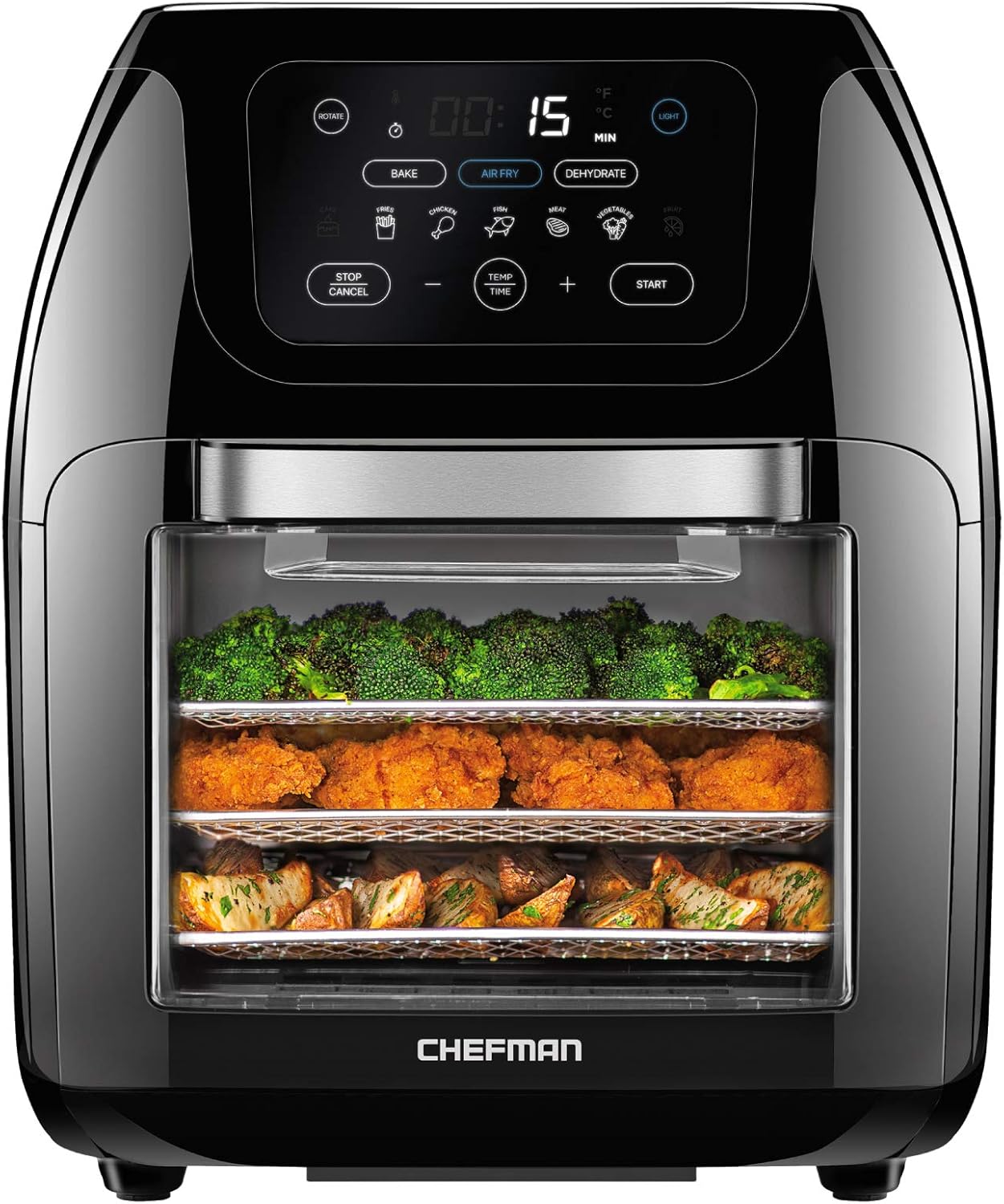
Chefman 5-Tray Round Dehydrator
Pros
- Lowest price point for electric dehydration
- Ultra-compact 12″ footprint
- Adjustable tray height
- Quiet operation
- Transparent trays for monitoring
Cons
- Fixed 140°F temperature (no adjustment)
- No timer or auto-shutoff
- Cannot expand capacity
- Requires tray rotation
- Unsafe for raw meat without pre-cooking
